
Why Longevity Starts With the Mind, Not the Body
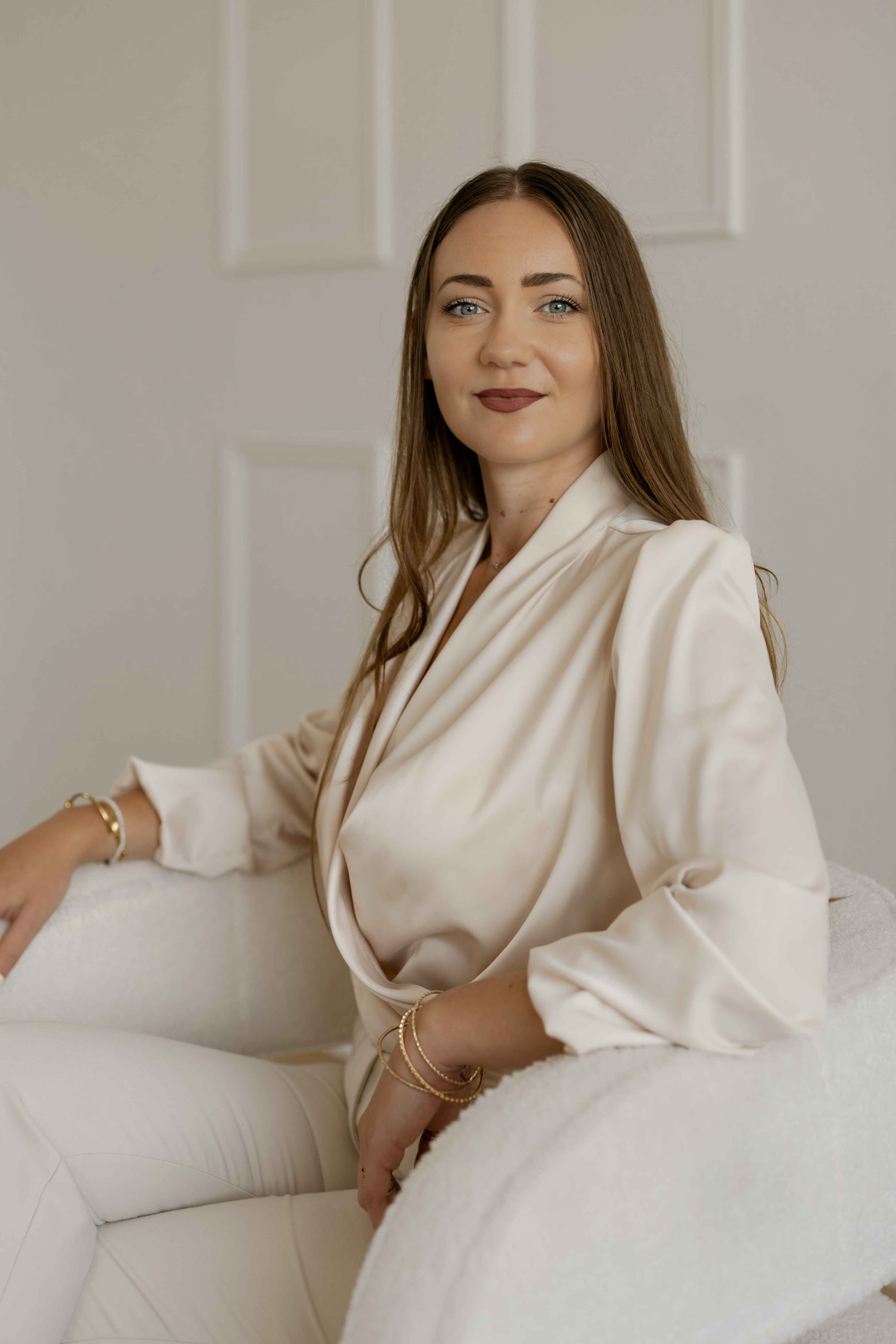
Most longevity clinics chase biomarkers. Mental longevity, clarity, resilience, cognitive edge, is the piece most high performers never measure. Here's why that has to change first.
You can probably name your resting heart rate. Maybe your VO2 max, your latest bloodwork, the supplement stack you've built over the past two years. If you're the kind of person this is written for, you've likely spent real money making sure your body will hold up for the next thirty years.
Now ask yourself a harder question: when's the last time you measured your mind the same way?
Not “how stressed am I” , everyone can answer that (But not everyone knows the REAL answer).
I mean actually measured: your working memory, your executive function, your capacity to hold complexity under pressure, the trajectory of your cognitive edge over time. For most high performers, the honest answer is never. Not once.
That gap is the reason LaVie exists.
The blind spot in longevity medicine
Longevity, as an industry, has a body problem, meaning it only has a body problem. Walk into almost any longevity clinic today and you'll get a panel of biomarkers: inflammatory markers, hormone levels, VO2 max, grip strength, maybe a DEXA scan. All useful.
All measuring the vehicle.
But… Almost none of it asks how the driver is doing.
This is a strange omission, because the people spending the most on longevity (founders, operators, senior executives, people whose work is fundamentally cognitive) are the ones whose actual bottleneck usually isn't their body. It's bandwidth. It's the fog that shows up in a 4pm meeting. It's the slower recall, the shorter fuse, the sense that you're still capable but the edge takes more effort to hold than it used to.
You can have a resting heart rate in the 50s and still be running your mind on fumes. Biomarkers won't catch that. They were never built to.
What “mental longevity” actually means
Mental longevity isn't a euphemism for stress management, and it isn't therapy rebranded. It's the idea that clarity, resilience, and cognitive performance are trainable, measurable, and (like cardiovascular fitness) something you either invest in deliberately or watch quietly erode.
Three things separate it from the wellness-industry version of “mindset work”:
It's measured, not assumed. A neuropsychological evaluation gives you an actual baseline of how your brain is functioning today (attention, processing speed, executive function) the same way a blood panel gives you a baseline for your metabolic health. Without a baseline, you're guessing whether you're improving or just having a good week.
It's proactive, not reactive. Most people's first real engagement with their mental health happens in a crisis… burnout, a breakdown, a diagnosis. Mental longevity starts before that point, the same way you don't wait for a heart attack to start exercising.
It's integrated, not siloed. Your psychological state, your cognitive performance, and your physical recovery are not separate systems that happen to share a body. Chronic stress shows up in inflammation. Poor sleep shows up in executive function. Nutrition shows up in focus. Treating these as unrelated is why so much wellness spending underdelivers, you're optimizing one lever while three others quietly cancel it out.
The cost of staying sharp the wrong way
Here's what we hear most often from the people we've talked to while building LaVie: I'm still performing. I'm just paying more for it than I used to.
More caffeine to get to the same baseline. More willpower to push through a task that used to feel automatic. More recovery time after a demanding week. None of this shows up as a diagnosis. It shows up as a slow tax on your output… and because it's gradual, it's easy to normalize : You adjust your expectations instead of addressing the cause.
The people who eventually do something about it usually reach for pieces: a therapist for the stress, a performance coach for the productivity, a nutritionist for the energy. Each piece can help. But none of them are talking to each other, none of them have your full picture, and none of them are tracking whether the whole system is actually improving over months and years.
How LaVie is built differently
We started from a simple premise: longevity should be psychological first, not an afterthought bolted onto a physical program.
That means a few concrete things:
One team, one story. Your psychotherapist, your neuropsychologist, your performance coach, your nutrition coach, and your body-recovery practitioners aren't working from separate intake forms. They meet to coordinate around your plan, so the person helping you sleep better knows what your coach is working on with your focus, and vice versa.
A real baseline, not a vibe check. A comprehensive evaluation gives you an actual starting point, and gets revisited over time so you can see, in measurable terms, whether the work is compounding.
A deliberately small patient list. Every practitioner in year one carries a limited caseload. The point isn't exclusivity for its own sake, it's that mental longevity work only works if the same person follows you over years, not a rotating cast of providers meeting you for the first time every visit.
What this looks like in practice
Picture the version of you that exists if this gap gets closed instead of ignored for another five years. Not a different person (the same drive, the same ambition) but with the fog traded for clarity, the willpower-tax removed, and a clear, longitudinal picture of how your mind is aging, the same way you already track your body.
We're opening in Austin in early 2027, with a limited founding circle before the doors open to the public. If the gap described here sounds familiar, if you've optimized your body for years and never once measured your mind the same way, that's exactly who this was built for.
Apply as a Founding Member
Notes d'Amélie :
As a former psychologist and neuropsychologist, licensed in Belgium, France, and Canada, I often struggled to find my place within the traditional mental health field.
Psychology and neuropsychology are most often associated with crisis situations, diagnoses, and the treatment of mild, moderate, or severe impairments. But that was never where my deepest interest lay.
I was drawn to optimization, performance, efficiency, and the idea of helping people function at their very best. As an entrepreneur myself, I also felt that my perspective and the questions I was interested in exploring were sometimes perceived as addressing a “non-problem.”
LaVie changed that for me.
I finally found a space where my professional interests, my entrepreneurial mindset, and my vision of mental health could come together. And, in doing so, I also found professionals who share that vision and want to approach mental health from a different perspective.
Today, I can help clients who finally recognize themselves in the services we offer, services that reflect their reality, their ambitions, and the way they want to live and perform.
LaVie is where I found my place, and where I hope our clients can find theirs, too.
\
Amelie Kijek
CEO, LaVie
Amélie, Founder of LaVie Mind Longevity & Collective. Ex-healthcare professional, entrepreneur at heart, specialized in building premium wellness and mental health experiences. French Savoir-faire.
Continue Reading
Related Articles

Ready When You Are
Bring this thinking into your own protocol.
Book a private consultation with a LaVie clinician, or secure your place among our Founding Members before we open in Austin.